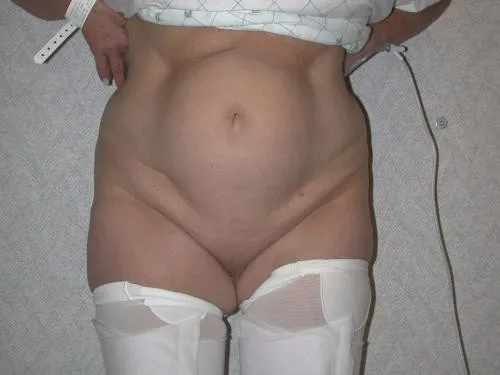
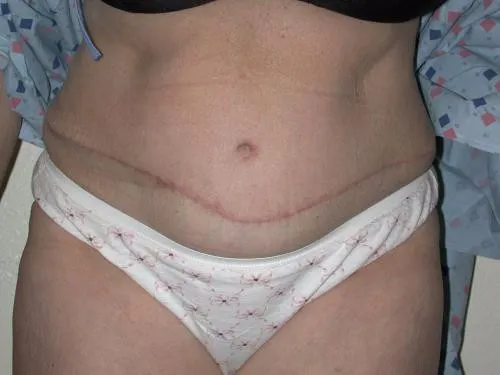
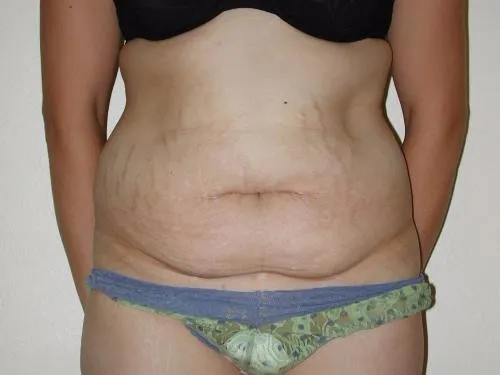
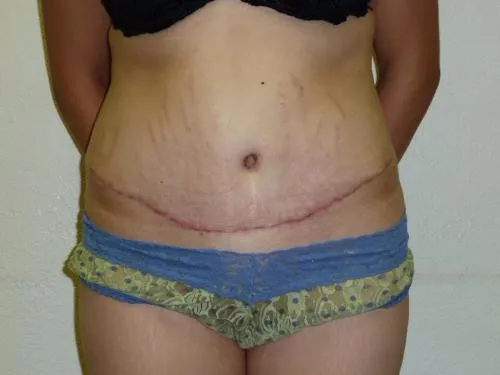
A tummy tuck (abdominoplasty) is a cosmetic procedure that removes excess skin and sometimes fat from the abdomen and tightens stretched or separated abdominal muscles. Patients may choose a tummy tuck because pregnancy or weight loss has left loose skin behind, because a lower belly pooch remains despite diet and exercise, or because the abdominal muscles have separated and no longer hold the midsection firm.
Dr. Mouchantat will work closely with you to create natural-looking, personalized results that elegantly flatter the contours of the rest of your body.
Tummy Tuck at a Glance
These are typical starting points. Your procedure details and recovery experience will be confirmed during consultation.
Procedure Time
2 to 4 hours
Anesthesia
General anesthesia
Downtime
About 2 weeks
Results
Visible immediately, refining over several months
Scars
Low across the abdomen, below the bikini line, and around the belly button
Cost in Denver
$12,000 – $20,000
Typical Denver-area range. Your price will vary.
What a Tummy Tuck Does
A tummy tuck makes the abdomen smoother and firmer by removing loose skin and tightening the underlying muscles. It can also improve stretch marks below the belly button, restore a more defined waistline, and help clothing fit more comfortably.
What a tummy tuck doesn’t do is take the place of weight loss. It removes excess skin and a limited amount of fat, and it does not slim the hips, thighs, or flanks on its own. When stubborn fat is also a concern, Dr. Mouchantat may recommend liposuction along with your tummy tuck.
Full, Mini, or Extended Tummy Tuck?
Most Common
Full Tummy Tuck
The right choice when loose skin and muscle separation involve the entire abdomen.
A full tummy tuck removes excess skin across the abdomen, tightens the abdominal muscles from the ribs to the pelvis, and repositions the belly button. Because it treats the abdomen as a whole, it produces the most complete change in contour.
Mini Tummy Tuck
The right choice when your concern is limited to the area below the belly button.
A mini tummy tuck uses a shorter incision to remove a smaller amount of loose skin from the lower abdomen. It also allows correction of the lower abdominal muscles only. The belly button is usually left in place, which keeps the recovery shorter.
Extended Tummy Tuck
The right choice when loose skin continues around the flanks, often after major weight loss.
An extended tummy tuck uses a longer incision to remove loose skin from the abdomen and the sides of the waist. It addresses laxity that a full tummy tuck cannot reach and is frequently part of body contouring after major weight loss.
Customizing Your Tummy Tuck
Each decision should be based on patient preference, anatomy, and aesthetic goals. Decisions confirmed at consultation.
01
Muscle Repair
Pregnancy and weight changes can stretch the abdominal muscles apart, a condition called diastasis recti. Dr. Mouchantat can bring the separated muscles back together with permanent sutures to restore a firmer, flatter abdominal wall. Whether you may need abdominal muscle repair depends on how far your muscles have separated.
02
Skin Removal
Pregnancy and weight changes can also stretch the abdominal skin beyond its ability to retract. Dr. Mouchantat removes the excess skin and tightens what remains to create a smoother waistline. An added benefit of skin removal is that it eliminates many stretch marks below the belly button.
03
Liposuction
Some patients also have stubborn fat along the abdomen, flanks, or hips. Adding liposuction to a tummy tuck refines both the front and the sides of the waist for a more balanced, proportionate figure.
04
Umbilical Hernia Repair
Some patients with separated abdominal muscles also have an umbilical hernia, a weak spot near the belly button. When both are present, the hernia can often be repaired during the same surgery, which avoids a second procedure and a second recovery.
Are You a Good Candidate?
If you have loose abdominal skin, separated abdominal muscles, or a lower belly pooch that has not responded to diet and exercise, a tummy tuck may be a good option for you. Your skin quality, muscle tone, weight history, and aesthetic goals will all help determine the approach that fits you best.
You may be a good candidate if you:
Have loose or sagging skin on the abdomen
Have a lower belly pooch that persists despite diet and exercise
Have separated abdominal muscles following pregnancy
Are at or near a stable weight
Are finished having children
Are in good overall health and do not smoke
If you have stubborn abdominal fat with good skin quality, and your abdominal muscles have not separated, Dr. Mouchantat may recommend liposuction instead of a tummy tuck.
Dr. Mouchantat’s Approach
A tummy tuck changes the shape of the torso, so every decision is made in the context of your proportions rather than the abdomen alone. Dr. Mouchantat plans muscle repair, skin removal, and any liposuction together, so that the waistline, hips, and abdomen will look natural and harmonious.
Two concerns patients often raise are the scar and the appearance of the belly button. Dr. Mouchantat takes both into consideration from the beginning by placing the incision low, where clothing and swimwear can conceal it, and by shaping the belly button to suit your new contour.
Diplomate of the American Board of Plastic Surgery
Fellow of the American College of Surgeons
Member of the American Society of Plastic Surgeons
Former Chief of Plastic Surgery and Chief of Surgery at Centura Saint Anthony Hospitals
A full tummy tuck is performed under general anesthesia and typically takes 2 to 4 hours.
01
Incision
Dr. Mouchantat makes the planned incision low on the abdomen, along with a small incision around the belly button.
02
Muscle Repair
The separated abdominal muscles are brought back together and secured with permanent sutures.
03
Skin Removal
Excess skin is removed, and the belly button is brought through a new opening.
04
Fat Removal
Some fat may be surgically removed, and liposuction may be performed to contour the waist and hips.
05
Closure
The incisions are carefully closed to support healing and minimize scar appearance.
For a Mini Tummy Tuck
A mini tummy tuck is performed under general anesthesia and typically takes 1 to 2 hours.
01
Incision
A shorter incision is made low on the abdomen.
02
Tightening
The lower abdominal muscles are tightened (when needed).
03
Skin Removal
Excess skin below the belly button is removed.
04
Closure
The incision is carefully closed to support healing and minimize scar appearance.
Scarring: What to Expect
Full and Extended Tummy Tuck
You will have a scar, but it won’t be the feature you notice. The incision runs horizontally across the lower abdomen, below the bikini line, and its length depends on how much loose skin is removed. You will also have a small scar around the belly button, which blends into the natural transition at the navel.
Mini Tummy Tuck
A mini tummy tuck leaves a shorter scar low on the abdomen, often similar in length to a C-section scar. Because the belly button is usually left in place, there is typically no scar around the navel.
Scars are initially more prominent, then gradually soften and fade around 3 to 6 months after surgery. Most fully mature, flatten, and blend with the surrounding skin by 12 to 18 months post-op. Final scar appearance is usually discreet but can vary with individual healing, genetics, and skin pigmentation. If you have a history of prominent scars, tell Dr. Mouchantat during your consultation so that he can recommend the best approach for you.
Your Recovery, Step by Step
While recovery varies by patient and surgical technique, most patients are ready to return to desk work within about two weeks.
First Few Days
Expect swelling, tightness, and soreness, and plan to walk slightly bent at the waist. Wear your compression garment, take short walks to support circulation, and arrange for someone to drive you home and help you at first.
About Two Weeks
Comfort and mobility improve steadily, and most patients are standing upright again. Drains, when used, are usually removed within the first 2 weeks, and many patients are ready to return to desk work and light daily activities.
Weeks Three Through Five
Swelling continues to decrease as the abdomen begins to settle into its new contour. Light exercise may be possible by week four or five, while heavy lifting and strenuous activity remain off limits.
Weeks Six and Beyond
Most patients are cleared for more strenuous activity around six weeks. Exercise should be reintroduced gradually, beginning with light cardio and strength training, and building up to abdominal exercises by around week 12.
Tummy Tuck Before and After
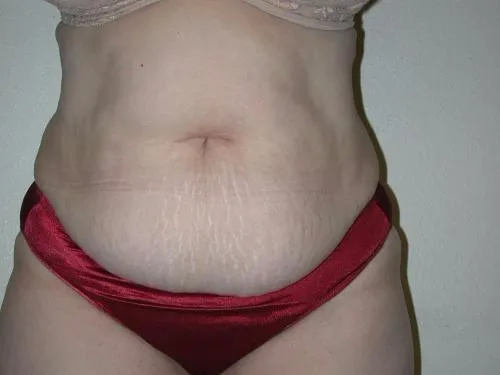
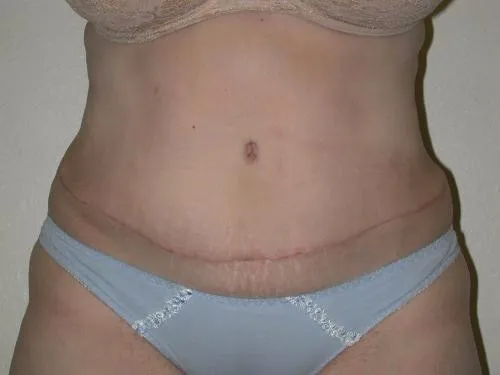
Look at more than the flatness of the abdomen when reviewing tummy tuck photos. Patients with a starting anatomy similar to yours can help you evaluate changes in skin quality, waistline definition, belly button appearance, scar placement, and how the abdomen balances with the rest of the figure.
A tummy tuck in the Denver area typically costs $12,000 – $20,000. Your final price will depend on factors such as the type of tummy tuck, whether muscle repair and liposuction are included, anesthesia and facility costs, and whether the tummy tuck is combined with another procedure. You’ll receive a personalized quote and information about available financing options during your consultation.
Dr.Mouchantat is great! From the initial consultation, he makes you feel comfortable, answers your questions, and helps guide your decisions about what route to go with his expertise. As a nurse, I had a lot of medical questions regarding my procedure and a lot of technicalities. He made me feel very confident that I was in good hands. I'm very happy with my results and they continue to get better every day, as I recover.
Jessica Parks★★★★★
Dr Mouchantat is a perfectionist, very professional, experienced and a caring person. He takes pride in his talent. You cant find many drs with all his qualities. I Highly recommend him.
Sherri McBean★★★★★
Dr. Mouchantat has done several procedures for me over the years, and I’ve been very pleased with the results. He is highly skilled, patient and compassionate. I have so much faith in him that I recommended him to my sister.
A tummy tuck in the Denver area typically ranges from $12,000 – $20,000, depending on the type of tummy tuck and your surgical plan. A detailed quote is provided at your consultation based on the choices made for your procedure. Financing options are available and will be presented to you at your consultation.
Should I have a full or mini tummy tuck?
A full tummy tuck addresses loose skin and muscle separation across the entire abdomen, while a mini tummy tuck is designed to address only the area below the belly button. Dr. Mouchantat can help you decide which approach fits your anatomy and the result you want.
Will a tummy tuck repair diastasis recti?
Yes. A tummy tuck repairs diastasis recti by suturing the separated abdominal muscles back together. Because muscle separation is a structural problem, diet and exercise usually cannot close the gap on their own.
Can a tummy tuck improve my C-section scar?
Often, yes. A C-section scar is usually located low on the abdomen, so it is frequently removed along with the excess skin. When any of it remains, it can often be incorporated into the tummy tuck incision. Dr. Mouchantat will review your surgical history during your consultation.
Will I have drains after surgery?
In some cases, small drains are placed to keep fluid from collecting under the skin. When drains are used, they are usually removed within the first 2 weeks, and you will receive instructions for caring for them at home.
How long do tummy tuck results last?
Results are designed to be long-lasting, especially when body weight remains stable. Pregnancy, significant weight gain, and the natural changes of aging can all affect the abdomen over time.
Can I get pregnant after a tummy tuck?
A tummy tuck does not affect your ability to get pregnant, but pregnancy can stretch the abdominal skin and muscles again, thereby undoing your results. If you are planning a future pregnancy, discuss it with Dr. Mouchantat during your consultation.
What happens if I lose weight after a tummy tuck?
Modest weight changes usually have little effect on tummy tuck results. Significant weight loss, including weight lost with GLP-1 medications, can leave additional loose skin. If you are actively losing weight or hoping to lose a substantial amount in the future, Dr. Mouchantat may recommend postponing your surgery until you are at a stable goal weight.
Your consultation is where your personalized tummy tuck plan comes together. Dr. Mouchantat will evaluate your abdominal skin and muscles, discuss the shape you want, and help you choose the type of tummy tuck and the surgical approach that best fit your body and goals.